
orderwise
10 Orderwise powered features for B2B eCommerce
More than just a backend tool Most businesses using Orderwise barely scratch the surface of what it can do, especially for customer experience on your eCommerce site. It’s often seen as a back-office system. A necessary engine that keeps operations running. The truth is, it holds untapped potential to improve your digital storefront. With the right integration, it can do…
10 business processes that can be automated with Orderwise integration
Integration is more than just a data connection ERP integration is often seen as a background IT task, just syncing data between systems. In practice, it’s a smart, strategic move that helps you automate processes, scale operations, and create real growth opportunities. This article doesn’t look at the foundations of a sucessful ERP integration; we cover that in our guide…
What a reliable ERP integration looks like
When systems talk to each other, and processes are automated, it “should” make life easier. But all too often, ERP integrations fall short. Yes, they move data, but by introducing errors and requiring constant maintenance, the integration can create just as much work as it saves. This article is for businesses that want more than just a functioning link between…
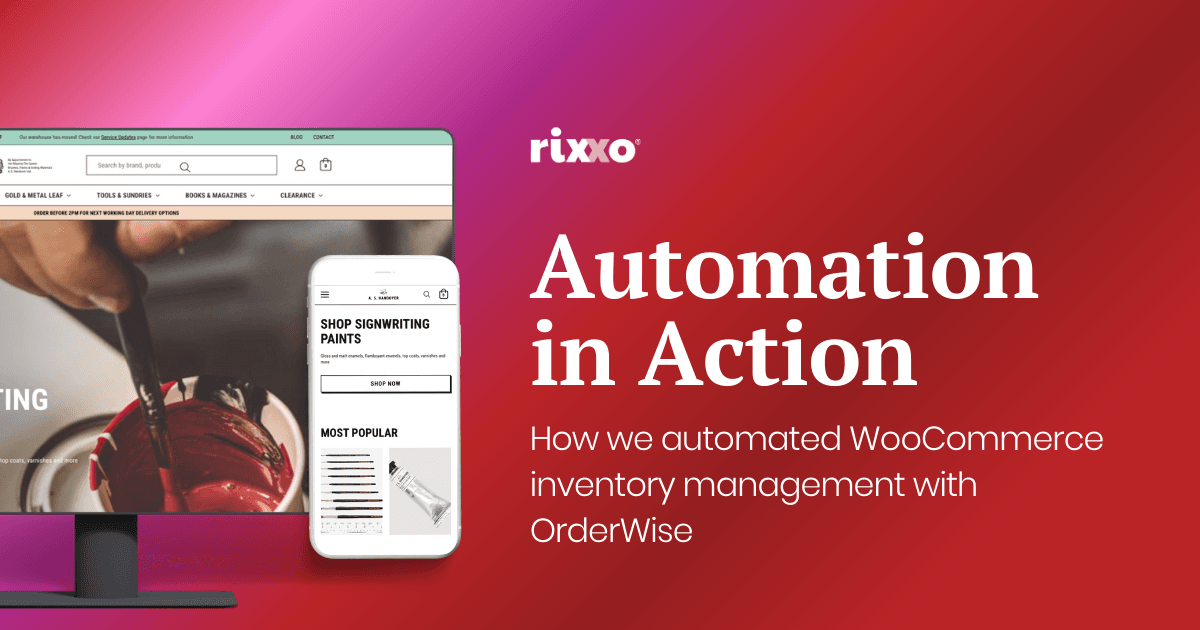
Automation in Action: How we Automated WooCommerce Inventory Management With OrderWise
How a simple automation streamlined inventory management for our client Managing an eCommerce store’s inventory can be a time-consuming challenge. When discontinued or out-of-stock items remain visible on the website, it creates confusion for customers and damages the shopping experience. One of our clients faced this very issue, and it started to take a toll on their business. The challenge:…
Solving the Orderwise API Limitation for Bulk Data Retrieval
The article explains how to solve a common issue with the Orderwise API, specifically its limitation of retrieving product data one at a time, which can be inefficient for businesses needing bulk data. It introduces the concept of custom export definition endpoints within the API and demonstrates how these endpoints, along with custom SQL queries, allow for efficient bulk data…